Transparency and Credibility Part 3

I’ve been steadily working my way through the perils of transparency and credibility, and I’ll wrap it up today with a discussion on publishing “personal stuff” on my blog. This fear stems from the fact that people who are close to me sometimes read the site, and maybe I don’t want my real-life connections to know some of this personal stuff. The seeming anonymity of the internet makes people much more willing to share their secrets and private information. In my case, this makes no sense, as I am clearly NOT anonymous. I’m easily identifiable by anyone who knows me, as I put my full name, resume, and contact information out for the world to see. Thus, it’s a false sense of anonymity that prompts me to consider sharing the more personal information about salaries and education costs. I think it’s because most of my readers are at least somewhat anonymous to me, so I feel like I won’t have to deal with the awkward real-life situation of readers knowing my salary and spending habits. So, what are some benefits to sharing this information?

First, my salary and cost of education are facts, so I shouldn’t really be embarrassed about the choices I’ve made. If I’m not doing anything to change those facts, I must be comfortable with them. As everyone else in the world also makes a salary and most likely has some educational spending, it’s not like I’ve got secret facts that are unique (like, say, if I’d killed someone. May be a fact, but I clearly wouldn’t want to share that if it was true.) Thus, my personal journey to my current salary, position, and educational spending might be very helpful to some of my readers. When I was considering the MBA, I researched costs and salary potential for months before deciding that this was the right direction to take my graduate education. I would love to be able to help someone else make this type of choice, with good information about where I started and where I progressed to after receiving the MBA. Did it really get me a salary increase? Was it really worth the hours spent in a classroom? Do I actually use the information I learned in my classes?

Second, in the interest of fostering a helpful community, I’m thinking that these facts would help others realize they’re similar to at least one other person in the world. Kind of a “if she can do it, I can too.” While discussing real estate options with a classmate of mine, I discovered that some options were available that I’d never considered. This classmate was kind enough to be completely open about the choices they’d made on real estate purchases, including total payments, monthly payments, long-term plan to pay off the loan early, interest rates, and other things that most people keep secret. Had this person not shared their experience candidly, I’d have no idea that my husband and I could do what they did! We tend to be very protective of our financial habits in the US, but this is not the case in much of the world. In some countries, “what’s your salary” is a common getting-to-know-you question. I think it’s because we tend to place a lot of our self-worth on what we make, and we know others will judge our worth based on our salary. So, if we just keep that number a secret, we can inflate our worth to whatever we want! As mentioned in the earlier parts of this discussion, I’m not fooling anyone into believing I’m perfect by not publishing “damaging” posts, so why not let people decide for themselves if I’m “worth it” by publishing my salary/educational spending?

Lastly, I think I could get some valuable feedback by posting this information. For instance, part of my strategy in pursuing the MBA, is to gain skills that I’m not able to gain in my current job or side projects. I’ve done extensive research on the types of positions that I would like to obtain, and then looked for some classes that help me gain the skills I’m lacking. Why not get some feedback from others who have these positions, or are similarly working toward them? I think the real-world feedback I might receive would be infinitely more helpful than the anonymous experiences of someone representing a company or business school… they’re paid to tell you that b-school is the right choice, that their company only hires the best, etc. How do I know if I’m getting paid what I’m worth if I don’t talk to other professionals like myself? How do I know that my degree is worth it if I don’t hear others’ experiences that also confirm what the internet tells me?

While I’m using this post to argue for transparency on salary and education costs, I’m still not completely sold on this idea. I might have to do baby steps on this one, starting with educational spending, and possibly working my way into salary issues. I’ve done well to be transparent by publishing this post and this post, and I’ve had positive feedback that this transparency increases my credibility, but you may have to wait a little longer for me to come around on this one!

Barista to Businesswoman: What I Learned Behind the Coffee Bar

As promised in this post, I’m officially publishing one of the “scary” posts in my queue!


I’m putting a pretty big secret out into the world by writing this post, but I think I’m far enough past it to write about it. The secret? I worked as a Starbucks barista when I couldn’t find a full-time job in my field. My freelancing hours weren’t enough, so I picked up the barista job. Now that I’m in my full-time position, I’ve heard that a lot of other over-qualified people have had to take jobs with less pay and less prestige during the bad economy. But you know what? I decided to give my best to that job, even if it was a temporary bump in my road to success.

In addition to learning to make some of my favorite menu items, I also learned a lot about dealing with people. The ability to make observations about people has been a transferable skill for my current job, where I deal with a lot of different personalities and perspectives. Starbucks helped me understand people’s buying habits, priorities, and often, their whole outlook on life. When you serve the person that is always on their cell, and just slides their card across the counter, it says something about them. What about the person who comes in every day to work on their laptop? You learn to take visual and audio cues differently, and process the information at a much faster pace. Business is the same way… can you figure out who’s the most senior person in the room? Can you tell by the tone of voice when the negotiation is going sour?

You wouldn’t think it’s a great networking opportunity, but I did manage to make quite a few connections. The craziest connection I made was with a VP at one of the largest technology firms in the world. She came in every day, impeccably dressed, and always in a hurry. She ordered the same coffee, the same way, and one of two pastry options, every day. She walked fast, talked little, and moved in and out with efficiency like you’ve never seen. Half the store was scared of her, but I wanted to be her. I did manage to talk to her a few times, and found out a little about her job and rank through these conversations. I talked with a fellow under-employed co-worker (she had a nursing degree but couldn’t get hired in CA) about somehow finding a way to network with Ms. VP. The day before I gave notice at Starbucks, I gave her a hand-written note that said, “I know this might seem a little strange, but from what you’ve said about yourself, you seem to be exactly where I would like to be at the peak of my career. I know you’re very busy, but would you have time to let me buy you a cup of coffee? If not, I completely understand, and I won’t bring it up again. If you do have time, please feel free to contact me at ashley@conscioulycorporate.com when it is convenient. Thanks, Ashley.” I was shocked, amazed, and excited to receive an email from her that evening, offering to set up an hour to meet! On the day of the meeting, I showed up with her coffee and pastry, just as she always ordered. She turned out to be very down-to-earth, and gave me an open invitation to contact her any time. My crazy networking risk paid off, and I’ve never regretted writing that note. I was also able to have several discussions about advancement into the corporate level with our district manager, who was happy to send along my resume if a corporate position opened up.

Finally, I learned a lot about managing people, inventory, and cash when I became a shift supervisor after 2 months as a barista. Starbucks is such a fast-paced environment, so every decision is spur of the moment. You can try to plan, but every minute brings on a new situation. And, when you’re in charge, you can’t freak out… even if you’re 10 drinks behind, you spill a drink all over yourself (thus putting you 11 drinks behind), one staff member is due for their Federally-mandated lunch break, AND there’s no milk in the fridge beneath the espresso machine. Again, what can be transferred to business? When the big presentation that’s due tomorrow isn’t finished, do you cry or pull an all-nighter to finish it? When you stand in front of an important client for the biggest pitch of the year, are you shaking or confident? Can you juggle 20 projects with the same deadline? I thought I could do a lot of these things before, but being front-and-center with customers who haven’t had their coffee yet and a staff that’s been up since 4:00 am teaches you a thing or two about yourself!

So now you know… my deep, dark, professional secret was the time I spent as a barista at Starbucks. But you know what? I learned a lot about myself, customer service, managing people and priorities, and how to make a great latte! What more could I ask for from a bridging-the-gap job?

Tranparency and Credibility Part 2

I wrote last week about the balance between transparency and credibility, and I’ve been mulling it over ever since. It was actually sparked by two complete posts sitting in the queue, waiting to be published. One post discusses a mistake I made at work, and how I went about fixing the mistake. The other post talks about my time when my career was flat-lined, and the job I held for most of that time. My conundrum is that, particularly on the blog, I have complete creative control… I don’t even have to bring up the “bad” stuff, and I can almost pretend that I’ve got it “perfect”. While we all know that’s not true, there’s absolutely no impetus to spur me to publish those posts, and I’m not lying to you by not publishing them. But, am I doing a disservice to all of us that have made a mistake (which, honestly, who HASN’T made a mistake at work, at least once?)? Am I doing a disservice to all those affected by the recession, thinking that they’ll never get their career moving again? There’s also the quandary about how much “personal stuff” to reveal on the blog, especially as it relates to career. Do I talk about salary and costs of my MBA? Let’s take a look at these questions!

First, regarding mistakes on the job, I’m coming to realize that I should probably just publish that post. I find it helpful when I come across these types of posts with a mistake and advice on fixing the problem, and I rarely judge the person who reveals it. Instead, particularly in real life, it helps me know that I can ask this person for advice, since they’ve probably done something similar in the past. For bloggers, I think this openness fosters a community of advice, such that we can all learn from each other and improve ourselves. If everyone only showed their “perfect” side, we’d never learn anything! If I notice that I’m making a similar mistake to my peers or fellow bloggers, I can find someone who’s already addressed this issue to ask about improving. I also think it’s healthy to bring up the subject of mistakes, since our corporate culture often shies away from taking a practical approach to those who make mistakes. It’s better to address the issue, figure out what went wrong and where it went wrong, and lay out a plan of action to ensure it doesn’t happen again. It’s also helpful to the organization if they realize that multiple people are making the same mistake, a process change might be necessary. So, my conclusion is that I’ll be publishing my mistake in the near future… hopefully at least one person will be able to learn something from my mistake.

Next, I’m realizing that I should probably publish the post about my job during unemployment. Most of my concerns about this post stem from pride, and the fear that people won’t think I’m credible. If someone takes a “lesser” job during a recession, does it prove that they’ll do whatever it takes to work and make money, or does it prove that they’re really worth less in the market? In the year or so since I’ve been in my current position, I’ve heard from a lot of people that they were unemployed, underemployed, or in some other “shameful” place in their career since the economy crashed. Some of those people are still in bad shape, and others have finally moved on to other opportunities. I’ve read several articles about companies discriminating against the unemployed, but many qualified professionals have been out of a job since 2008! Again, I think we need to bring these issues to light, and help change the misconception that taking a “lesser” job in a down economy disqualifies you from a successful career. Some of the most frustrating and embarrassing calls came from companies that wanted to hire someone cheap, so they picked out this one little line item at the bottom of my resume and assumed I was that person. I realize I’m not defined by my unemployment job, and I think it would be helpful for others to realize the same is true for them. So, my conclusion is that I’ll be publishing my job during unemployment in the near future… hopefully it will help someone else feel like there is a light at the end of the tunnel!

As this post is already running long, and “personal stuff” is a whole other topic in itself, I’m going to push the question about salaries and education costs to tomorrow’s post. What do you think about transparency and credibility on your blog or real-life interactions? Am I right to publish these “damaging” posts?

When You’re Just Too Busy!

So, today is supposed to be an outfit post, and I should have posted some great insight into business and marketing on Monday and Tuesday. But I was just too stinkin’ busy! My brother got married this weekend, and I celebrated my 3 year wedding anniversary with my husband! I use the word “celebrated” loosely, since our actual anniversary day was spent in a graduate economics class for me, and stuck at the office for him. We thoroughly enjoyed the weekend with my family, and managed to find time to grill some meat on Memorial Day! My tips for when I’m just too busy:

Do things in advance. This one seems like a no-brainer, but I’m guilty of putting things off until their deadline, and sometimes just forgetting that I’ve already done this step. For example, I’ve got a few blog posts in the queue that I could’ve put up over the last few days. I totally forgot that I had them tucked away for a rainy day, until I got on this morning to write this post! The same is true for cooking. When I’m super busy, it’s the first thing to go. That’s why grilling for the whole week, or making one big meal and storing the leftovers is a huge help. Schedule some time to do things in advance, so that when the insanity hits, you’re already stocked up on some of your necessities.

Walk Away. I’ve talked before about the need to walk away if you hit a block on a problem, and the same is true when you’re busy. It may seem like the best way to get un-busy is to keep being more busy in the short-term. But as your focus slips and your stresses increases, your productivity decreases. Schedule time for breaks for meals, sleep, and generally unwinding. This was how I spent Memorial Day, just attempting to relax a little and allow myself time to refresh, before I jumped right back in to my busy schedule.

Don’t sweat the small stuff. The other “first” thing to go when I’m busy, is cleaning the apartment. Dishes in the sink? Not as important as class. Laundry in the dryer? Not as important as this project at work. Generally keeping the house in order? It can wait. I’m less sensitive to clutter than my husband, so sometimes he’ll pick things up just to make himself feel less stressed. But, feeling like you have to do it all perfectly all the time is completely unrealistic. It’s not worth the brain power to keep these thoughts running in the background when you’re trying to focus on much more immediate tasks. I have to tell myself to just let it go sometimes.

So, this is not terribly insightful, but sometimes you just need to hear a simple reminder that it’s all going to turn out fine in the end! I’ll be back later this week and next with some more interesting posts, but for now, I hope you’re enjoying a slightly less busy life this week!

100th Post and Grades are Up!

Well, I’m officially posting my 100th post on the blog, and coming up on the two year anniversary of the launch! I know there are many more prolific bloggers out there, but 100 posts is pretty amazing to me. I’ve still got some drafts in queue, and it makes me feel good to know that I’ve been able to talk for 100 posts about my career and industry! This post also comes just before the six-month mark on the switch from Musing Marketing to Consciously Corporate, and I have to say, the switch has been well worth it! From what I can tell on my stats, I’ve almost doubled my traffic by broadening my horizons, and I’ve been receiving a few more comments and Tweets about my posts. I’ve been able to use this tool to connect with classmates, friends, and the blogging community at large in a much more effective way. The ideas flow more freely now that I’m looking at every situation as a potential blog topic, and I’ve been able to bring some of these “aha” moments into my job and my school work. All in all, I’m quite proud of this 100th post!

On another note, grades are up! I’m also proud of this first semester in grad school, since I tackled one of my weaker subjects with success! I ended up with an “A” in Consumer Behavior, “A” in Financial Accounting, and “A-” in Managerial Accounting. Based on the graduated scale for calculations at UTD, my GPA for the semester is a 3.86! This puts me slightly ahead of my graduating GPA in undergrad, and I’m hoping to continue this trend for the remainder of my MBA. However, statistics and finance will definitely be more challenging, but I’d like to stay right around the 3.75-3.8 range if I can. I start my summer courses next week, so I’m excited to continue my progress on the road to graduation!

So, exciting times on the blog and the real-world this week! Websites going live, grades posting, blog milestones… what’s next? Let me know what you’ve accomplished lately, it’s kind of fun to brag once in a while 🙂

When Stress Kicks Your Butt

It’s been a wild ride the past few weeks, with class, work deadlines, travel and generally running around like a crazy lady! I’m long over-due for a good butt-kicking at the gym, to help me mitigate the stress I’ve been feeling recently. So, I figured, why not share some of my tips to handle stress, in exchange, hopefully, for some of your tips?

Leave it all on the track. I’ve found that when I’m stressed, I usually need a good, long run. Granted, about 3 miles in, I’m about done with the run, so it doesn’t have to be THAT long of a run. Either way, my motto is, “leave it all on the track”, meaning you should run, lift, cycle, swim, or generally exert yourself until you’re physically too tired to care about the stress of the day. I don’t mean hurt yourself, but get to the point that you’ve got to focus on your breathing, leaving you zero focus for your stress. Currently, I’m very wound up because I haven’t had a good work out in almost 2 weeks! I’m going to spend at least 4 nights in the gym during my two week hiatus from class before summer school starts.

Give yourself some space. You ever notice that you’ll stare at the same paper you wrote, trying to find typos and grammatical errors, only to have a peer take a quick glance and find a ton of mistakes? When you work on something for too long, you start to lose perspective. It seems counter-intuitive, but I’ve found that sometimes it’s best to walk away, and give yourself time to focus on something else (like breathing while running, see point above!). Sometimes we just need to let our minds have a little room to work out a problem, like the “aha” moments in the shower. It’s not that the shower imbues magical analytical skills, but it does allow your mind to “roam”. During the “roaming” process, you might just stumble on a solution. I’ve found that when I’m stressed, it’s helpful to physically walk away from my work to allow my mind time to roam and re-focus for better productivity when I return to a project.

Health, it does a body good. I’m terrible about not sleeping enough or eating properly when I’m stressed, which makes me feel gross, which leads to lower productivity, which causes the cycle to start all over again! While you may think that using every minute of every day to finish your projects will reduce your stress, taking time to let your body rest will actually improve your productivity in the long run, which reduces your stress level. Also, drinking plenty of water and eating a balanced meal will improve your focus. Further, when your body feels good and operates efficiently, you’ll feel like you’re making more progress throughout the day. Good ‘ole sleep and nutrition do wonders for my stress level!

So, while I attempt to follow my own advice, maybe you have found some other helpful hints. I’ll be hitting the gym and going to bed early, will you?

What do you want to be when you grow up?

I attended my brother’s college graduation this past weekend, and I had a few moments to remember back to my college graduation. I was looking forward at the adult life, career, getting married, going forward with a whole chapter…. then, I fell flat on my face in the career department. The marriage and the adult life worked out great, but the career was pretty much in the toilet! In the three years since graduation, the marriage and adult life are better than ever, and the career is finally on the up-swing. I’m gaining a lot of knowledge and experience in several different areas of marketing, and I’m well on my way to getting my MBA. So, how did I get here, and what did I learn along the way?

The paths we walk are winding. I never thought I’d end up where I am after the twisty path I took. I started out as a musical theater major at a small (think smaller than my high school!) liberal arts college in Arkansas. After a series of unfortunate events, and coming to terms with the fact that I was not, in reality, going to be a Broadway star, I transferred to a large state school and tried to figure out what I wanted to be when I grew up. I finally found marketing, but when I moved to California just as the market crashed, I found out that no one really wanted to hire a marketer. I had recruiters and decision-makers tell me that I was in the worst possible geographic area for my skill set, that 3 years ago I would’ve been the perfect candidate, and that no one could afford to hire a marketer full-time. It was discouraging to say the least, and I ended up job-hunting in my home state of Texas, since we have a much more diversified business community. After all that, I’ve learned that there’s rarely a straight shot to the “dream job”. Sometimes you have to take jobs you don’t like, use skills you haven’t fully developed, and consider options that seem to come out of the blue.

Be flexible. Since the paths we walk are winding, you’ve got to be flexible! When I graduated college, I had it all planned out: the type of job and product, the size of the company, the dress code… basically, I thought I was going to get the dream job. Sure, I pretended to scale it down to “reality”, but the truth is, I had a rigid set of criteria that I HAD to follow. Wrong! I ended up working for a start-up (not my idea of a great environment), in a super casual office (not my idea of a good dress code), and the manufacturing industry (not my idea of of the perfect product). However, as ridiculous as that job was, I did learn a lot about how things probably shouldn’t go the next time around. I also took freelancing opportunities to dabble in some areas that I hadn’t learned about in school. In short, I finally decided to just walk the path that was available, instead of sitting still until I could go straight to my “destination”.

The new wears off. Now that I’m in a much more suitable job, pursuing my master’s, and living life like a normal person, I’ve come to realize that the “new” wears off. Everything isn’t a bright shiny toy like I thought it would be. And you know what? It’s kind of awesome being in a routine of productivity! I am starting to realize that the job isn’t all there is to life, and that sometimes a lazy weekend at home with my husband is just as good as the high from a crazy day at the office. Don’t get me wrong, I like to have a rush from a deadline at work, and I’m still striving to make those deadlines bigger and faster. But I think we all believe life is like a movie, and I’ve found that once the new wears off, you’ve got to have a strong foundation underneath to make life worthwhile.

Watching the graduates this weekend made me quite introspective about where I’ve been and where I’m going, and I think I’ve grown and matured a lot over the past 3 years. It also made me look forward to the day that I don another cap and gown to attend my graduation ceremony from the master’s program, and once again move forward with bright-eyed enthusiasm. I’m glad to say, though, that I’m pretty satisfied with the present!

3 Lists for Evaluating Job Satisfaction

Yesterday’s post discussed how to quantify overall life satisfaction using weighted averages across broad categories. This being a professional blog, today’s post is going to focus on the category of career satisfaction, and evaluating job opportunities. Along with the weighted averages, I used the following lists in my discussions about the decision to accept my current job.

The “dream job”. This list was comprised of all the elements that contributed to my “dream job”. Now, the dream job should be somewhat rooted in reality, in that it should be something attainable for you at the height of your career. For example, it’s not really viable to discuss being a movie star as a dream job for most people, since it’s highly unlikely that most people will become a movie star. This is particularly true if you lack the skills, training, and experience to even break into the movie industry. So, now that we know the dream job is really the most satisfying job available if you have the proper skills, training, and experience, we can come up with a list of items that define the dream job. The “dream” part of this list is that you can include whatever “silly” characteristics you want. Go ahead and put down that you want the job to be in City X, or that you want to have a company car or corporate expense account. Go ahead and include a specific title that you’d like to have, or number of direct reports that you want to supervise. I would recommend using salary requirements that are attainable in your field… again, it is highly unlikely that most of us are going to make $15 million per year, so you won’t be able to take strong steps to achieve that quality in your dream job. For my list, I included some broad reasons why this characteristic was important in creating my dream job. This list should remain largely unchanged throughout your career. Here’s a few items that made it onto my list:

Office located in a downtown area because I love the energy of commuters and lunch meetings that occurs in such a business-centric environment

Salary in the six figures and a signing bonus, because that’s what over-achievers and industry experts earn in my field, and I want to be at the top of my industry

Dress code that requires a suit and heels occasionally, but at minimum requires business casual, because I like a company and clients that respect presentation in an employee, dressing up makes me feel confident

Travel up to 30% because I like to deal with people face-to-face whenever possible

Company has a distinct culture that permeates every department and interaction, including a Christmas party and some morale/team-building events

I also included several specifics about the day-to-day tasks and responsibilities that the position requires, and why those tasks make up my dream job. You can include any number of items on the list, so think hard about what would make you 100% ecstatic to accept an offer and feel like you’ve attained the “dream job”.

The “acceptable job”. This list includes all the items that make up a job that you would consider taking, and you would be mostly satisfied with. This is generally the type of job you’ll have when you don’t have 10 years of experience and a graduate degree or other higher education relevant to your field. The requirements for this job should change every few years, as you gain the skills, training and experience necessary to obtain the dream job. For example, your salary requirement for the acceptable job as a new college grad might be $30,000 per year, but when you have 3 years of experience, your salary requirement might increase to $45,000 per year. If the dream salary is in the six-figure range, you should be evaluating how the salary at your acceptable jobs furthers you on a path to reaching the dream salary. For me, a key component to my acceptable job list was “high growth potential.” After working for a company that had no clear path for growth, I made this a requirement for my next acceptable job. I still see “high growth potential” as an important characteristic of any future position until I reach my dream job. Here’s a few of the items that were on my “acceptable job” list:

Business hours/schedule that would allow me to pursue my MBA while working

Minimum salary requirement

High growth potential with regular performance and compensation reviews

Opportunities to travel occasionally

Again, I included specifics about the day-to-day tasks and corporate culture, but I was much more lenient about these requirements. As you can see, many of these requirements are different than my dream job, but they do contribute to my ability to obtain my dream job. Once I complete my MBA program, I will no longer need a schedule that allows me to attend school. And, upon completion of my MBA program, I will have made progress on my path to my dream job by increasing my knowledge in my area of expertise.

The “deal breakers.” These are characteristics that are a no-go for a position, under any circumstance. I don’t care how much you pay me, but I simply cannot sit at a desk all day crunching numbers or making spreadsheets. I hate being by myself all day long, so an all-virtual company or completely telecommuting position is a deal breaker. While I might be willing to run numbers occasionally or telecommute once in a while, I would never be satisfied in a position with these qualities as the main job description. Don’t compromise on deal breakers at any point, because you’ll ultimately be dissatisfied; and job dissatisfaction leads to low productivity, lack of motivation, and degrades your overall life satisfaction.

If you really want to dig deep, you can use the weighted averages method from yesterday’s post. However, since this list is much more comprehensive, it might be difficult to assign percentages. So what’s your “dream job”? What steps are you taking to obtain your dream job? How is your “acceptable job” helping you progress toward the “dream job”?

5 Steps to Quantify Life Satisfaction

I’m married to an engineer, and he likes to analyze life using as many empirical metrics as possible. I, as a marketer, tend to take a more psychological and situational approach. This makes for interesting discussions when we have to make big life decisions. That being said, the big life discussion of my current career path was aided by an empirical system of weighted averages that my husband suggested to evaluate the different decisions. While I’m not normally a numbers kind of girl, I’ve found this method to be very effective (I did use this system to evaluate colleges, so I knew it would work before we tried it). So, how do you quantify satisfaction?

Step 1: Create a list of about 5 categories that most contribute to your satisfaction in life. I would recommend using categories that are broad enough to encompass changing life phases, but narrow enough to be acted upon. You can use anything that contributes to your satisfaction, from hobbies, to career, to family, to spirituality and volunteer work. I would also recommend that these categories have a significant effect on how you make life choices,  how you spend your time, and have actionable and measurable steps associated with them. For example, while it may significantly increase your satisfaction to “be a successful person”, a better category might be career. Or, if your satisfaction is impacted by “helping people”,  it might be better to choose the category “volunteer work”.

Step 2: Assign each of the 5 categories a percentage for the amount that the category impacts your satisfaction. For example, if your categories include career, family, hobbies, charity work, and education, you might say that career is 20%, family is 35%, hobbies are 10%, charity work is 20%, and education is 15%. Be honest with yourself when choosing and rating each category. If you honestly don’t receive much satisfaction from career, don’t give it more weight than hobbies. For me personally, career has a significant impact on my satisfaction at this point in my life, and for the foreseeable future.

Step 3: Assign a percentage for your current satisfaction in each category. Are you 100% satisfied in your career? Are you only 50% satisfied with your career? Go through each category and give an honest percentage with how satisfied you are with that area of your life.

Step 4: Multiply the satisfaction percentage with the weight of each category. Now add the categories up… and the end percentage is how satisfied you are with your life. What’s your total? It’s rare than anyone will be 100% satisfied, but maybe 90%? What if your percentage is low, say, 30% satisfied?

Step 5: Analyze the results, and determine which areas of your life are causing the most dissatisfaction. What steps can you take to change that? How much of your satisfaction is built on choices and situations within your control, and how much is not in your control?

Now that you’ve determined your overall satisfaction and what contributes and heavily impacts that satisfaction, part 2 will dive deeper into each category. I’ve included a short hypothetical example below to show the calculations, and I look forward to sharing more steps in tomorrow’s post!

Categories    Weight      Satisfaction     Total
Career         20%           90%             18
Family         35%           96%             33.6
Hobbies        10%           60%              6
Volunteering   20%           98%             19.6
Education      15%           90%             13.5
Total Life Satisfaction:   90.7% 

Photo Job Shadow Project

A big thanks to Nicole at EmployedPanache for inspiring and sharing the Photo Job Shadow Project! The premise is to take pictures throughout your day to give some insight into what your job looks like. So, here’s a quick look at my day as a Marketing Coordinator.

I skipped all the waking up and getting ready, but that usually happens from 7:04 am until 7:37 am… I’ll spare you the details!

8:00 am: Arrive at the office and grab some coffee and a granola bar to be consumed while checking and answering my e-mail.

Email, Coffee and Granola Bar at 8:00 am

9:00 am: Go through the different magazines for the month and verify our ads were placed and run correctly. After verification, compare invoice information to the Media Plan to ensure accuracy. Approve the invoices and deliver the invoices to the Accounting Department for payment.

Verifying ad placements in various publications

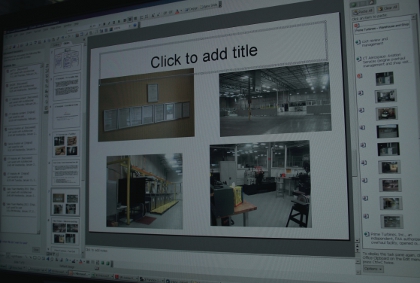
10:30 am: Continue work on a PowerPoint Presentation for the Sales Team.

Creating the sales presentation in PowerPoint

11:00 am: Realize I don’t have all the pictures that I need for the sales presentation, so I head out for a mini photo-shoot! (Logos have been intentionally blurred)

Company logo for sales team presentation

12:00 pm: Finished the photo shoot and picked up a super healthy and nutritious lunch from Taco Cabana, minus the healthy and nutritious part! Checked to see if my grades were posted yet while enjoying my enchiladas… STILL no grades posted.

Delicious enchiladas from Taco Cabana!

1:00 pm: Our tabletop booth was delivered, so I can check the new graphics we just received! This booth will be sent to a tradeshow in about one month, so I’m hoping the graphics are perfect (just as they were in the proof I verified a month ago).

Tabletop Booth

1:45 pm: Graphics are hung, and they look great! One of the magnets on the booth hardware isn’t sticking very well, so I’ve got to ask the manufacturer about replacing it. (Logos have been intentionally blurred)

Booth graphics!

2:00 pm: Unpacking a few shipments of company promotional items. I’m in charge of the promotional room, so it’s like Christmas every few weeks in my office!

Organizing the promotional room

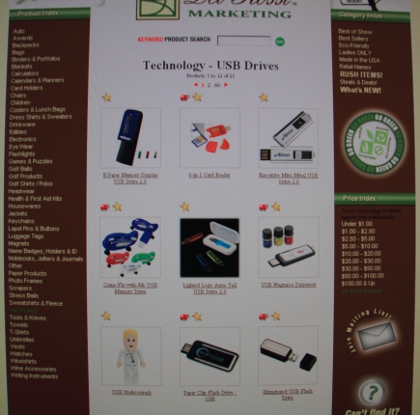
3:00 pm: Pulling pricing for more promotional items, it’s an on-going process!

Checking quotes for promotional pricing

3:30 pm – 5:00 pm: Edit the pictures from the mini photo-shoot, answer more e-mail, accept more packages, then head home!

My schedule is never the same from day to day, and it’s always a balancing act! It’s also pretty cyclical, this week was verifying and unpacking all the orders, which means that a few weeks prior it was designing and proofing everything. The most challenging aspects of my job are keeping the priorities straight, and managing the relationships with our vendors and suppliers. I enjoy the fast pace and variety of projects in my position as a Marketing Coordinator.