It’s Friday!

So, the weather is supposed to be beautiful this weekend, and I’m looking out my office window longingly at the sunshine. But, no fear, it’s Friday! Feel free to take the laptop into the gorgeous weather to read a few stimulating articles:

For the abstract and semi-philospohical, via Paul Graham essays: The Acceleration of Addictiveness – The effect of technology

For the social media un-savvy, via Forbes: Twitter in 4 Steps

For the musician and tech obsessed: Musescore.com (open source music creation/sheet music software, as touted by my talented husband!)

In case you missed my guest post on The New Professional: Self-Promotion, How to do it right (kind of ironic, eh?)

Like the links? Follow me on Twitter for links and blog posts daily!

Guest Post for The New Professional

I’m excited to be guest posting for The New Professional today! Click over to Angeline’s blog to see my post on “Self-Promotion: How to do it right”. Angeline does a great job posting about work-related issues and fashion-related issues. She’s got great corporate style, and great advice for business professionals, so read through her other posts after you check out my guest post!

Getting Physical on the Job

Why am I standing with the electricity meters?


Outfit for Gettin' Physical


Like the outfit? Check out more details here.


The marketer in me really wanted to post the title as, “Let’s Get Physical” or “I Wanna Get Physical”, but I figured that was a REALLY unfair attention grab, vs. the slightly unfair attention grab from the title I chose. So, what does “getting physical” have to do with the job? You’re looking at the outfit I wore while moving tradeshow booth cases and promotional materials across the warehouse! We do quite a few tradeshows during the year, and part of my job as the Marketing Coordinator is to make sure that the shipments are ready, and that the promotional room is organized. In theory, I have a “desk job”, but in reality, I spend a fair amount of time each month bending, lifting, and transporting items that are pretty heavy for “light office work”. Personally, I really enjoy the physical portion of my job, as it gives me a break from the computer and lets me get in some exercise when I don’t have time for the gym. However, this physical work makes it a little difficult to be in “professional” clothes. Clearly, I can’t wear a skirt to bend and lift, but pants tend to get hot after two or three trips up the stairs while carrying boxes. Thus, I end up doing my best to choose my lightest-weight pants and shirts when I know I’ve got physical work ahead of me.

While I don’t mind some physical work, I do wonder how many jobs that are considered “desk jobs” actually involve quite a bit of physical work. Most job descriptions that I’ve seen do include some requirements about the ability to stand or sit for an extended period of time, ability to lift a certain amount, etc. I think I’m much better prepared now to understand what those descriptions entail, and I think it’s wise to make sure you include the physical portion of the job when considering an offer. If you have any sort of health problem that might preclude you from physical work, you should definitely ask about the physical requirements, even for positions that don’t seem like they would require physical work. Consider lawyers, copywriters, accountants, and proposal/grant writers. Each of these seems like a white-collar job without physical components… but what happens when you have to carry the case notes home, the artwork/storyboards, or the paper forms that you just can’t file electronically? Can you lift your briefcase? Or, what about sales reps that often bring samples to their clients? Can you handle rolling around a huge suitcase full of product, lifting the case into the car, and bending up and down to retrieve the items? It doesn’t seem like much, but these physical demands do call for some consideration in how you approach your day.

This outfit worked for the first 15 minutes, but I did start to get hot with the belt around my waist. Maybe next time I’ll try a belt-less look to keep me cooler! How do you prepare for the physical elements in your job? Like the outfit? Check out more details here.

3 Lists for Evaluating Job Satisfaction

Yesterday’s post discussed how to quantify overall life satisfaction using weighted averages across broad categories. This being a professional blog, today’s post is going to focus on the category of career satisfaction, and evaluating job opportunities. Along with the weighted averages, I used the following lists in my discussions about the decision to accept my current job.

The “dream job”. This list was comprised of all the elements that contributed to my “dream job”. Now, the dream job should be somewhat rooted in reality, in that it should be something attainable for you at the height of your career. For example, it’s not really viable to discuss being a movie star as a dream job for most people, since it’s highly unlikely that most people will become a movie star. This is particularly true if you lack the skills, training, and experience to even break into the movie industry. So, now that we know the dream job is really the most satisfying job available if you have the proper skills, training, and experience, we can come up with a list of items that define the dream job. The “dream” part of this list is that you can include whatever “silly” characteristics you want. Go ahead and put down that you want the job to be in City X, or that you want to have a company car or corporate expense account. Go ahead and include a specific title that you’d like to have, or number of direct reports that you want to supervise. I would recommend using salary requirements that are attainable in your field… again, it is highly unlikely that most of us are going to make $15 million per year, so you won’t be able to take strong steps to achieve that quality in your dream job. For my list, I included some broad reasons why this characteristic was important in creating my dream job. This list should remain largely unchanged throughout your career. Here’s a few items that made it onto my list:

Office located in a downtown area because I love the energy of commuters and lunch meetings that occurs in such a business-centric environment

Salary in the six figures and a signing bonus, because that’s what over-achievers and industry experts earn in my field, and I want to be at the top of my industry

Dress code that requires a suit and heels occasionally, but at minimum requires business casual, because I like a company and clients that respect presentation in an employee, dressing up makes me feel confident

Travel up to 30% because I like to deal with people face-to-face whenever possible

Company has a distinct culture that permeates every department and interaction, including a Christmas party and some morale/team-building events

I also included several specifics about the day-to-day tasks and responsibilities that the position requires, and why those tasks make up my dream job. You can include any number of items on the list, so think hard about what would make you 100% ecstatic to accept an offer and feel like you’ve attained the “dream job”.

The “acceptable job”. This list includes all the items that make up a job that you would consider taking, and you would be mostly satisfied with. This is generally the type of job you’ll have when you don’t have 10 years of experience and a graduate degree or other higher education relevant to your field. The requirements for this job should change every few years, as you gain the skills, training and experience necessary to obtain the dream job. For example, your salary requirement for the acceptable job as a new college grad might be $30,000 per year, but when you have 3 years of experience, your salary requirement might increase to $45,000 per year. If the dream salary is in the six-figure range, you should be evaluating how the salary at your acceptable jobs furthers you on a path to reaching the dream salary. For me, a key component to my acceptable job list was “high growth potential.” After working for a company that had no clear path for growth, I made this a requirement for my next acceptable job. I still see “high growth potential” as an important characteristic of any future position until I reach my dream job. Here’s a few of the items that were on my “acceptable job” list:

Business hours/schedule that would allow me to pursue my MBA while working

Minimum salary requirement

High growth potential with regular performance and compensation reviews

Opportunities to travel occasionally

Again, I included specifics about the day-to-day tasks and corporate culture, but I was much more lenient about these requirements. As you can see, many of these requirements are different than my dream job, but they do contribute to my ability to obtain my dream job. Once I complete my MBA program, I will no longer need a schedule that allows me to attend school. And, upon completion of my MBA program, I will have made progress on my path to my dream job by increasing my knowledge in my area of expertise.

The “deal breakers.” These are characteristics that are a no-go for a position, under any circumstance. I don’t care how much you pay me, but I simply cannot sit at a desk all day crunching numbers or making spreadsheets. I hate being by myself all day long, so an all-virtual company or completely telecommuting position is a deal breaker. While I might be willing to run numbers occasionally or telecommute once in a while, I would never be satisfied in a position with these qualities as the main job description. Don’t compromise on deal breakers at any point, because you’ll ultimately be dissatisfied; and job dissatisfaction leads to low productivity, lack of motivation, and degrades your overall life satisfaction.

If you really want to dig deep, you can use the weighted averages method from yesterday’s post. However, since this list is much more comprehensive, it might be difficult to assign percentages. So what’s your “dream job”? What steps are you taking to obtain your dream job? How is your “acceptable job” helping you progress toward the “dream job”?

5 Steps to Quantify Life Satisfaction

I’m married to an engineer, and he likes to analyze life using as many empirical metrics as possible. I, as a marketer, tend to take a more psychological and situational approach. This makes for interesting discussions when we have to make big life decisions. That being said, the big life discussion of my current career path was aided by an empirical system of weighted averages that my husband suggested to evaluate the different decisions. While I’m not normally a numbers kind of girl, I’ve found this method to be very effective (I did use this system to evaluate colleges, so I knew it would work before we tried it). So, how do you quantify satisfaction?

Step 1: Create a list of about 5 categories that most contribute to your satisfaction in life. I would recommend using categories that are broad enough to encompass changing life phases, but narrow enough to be acted upon. You can use anything that contributes to your satisfaction, from hobbies, to career, to family, to spirituality and volunteer work. I would also recommend that these categories have a significant effect on how you make life choices,  how you spend your time, and have actionable and measurable steps associated with them. For example, while it may significantly increase your satisfaction to “be a successful person”, a better category might be career. Or, if your satisfaction is impacted by “helping people”,  it might be better to choose the category “volunteer work”.

Step 2: Assign each of the 5 categories a percentage for the amount that the category impacts your satisfaction. For example, if your categories include career, family, hobbies, charity work, and education, you might say that career is 20%, family is 35%, hobbies are 10%, charity work is 20%, and education is 15%. Be honest with yourself when choosing and rating each category. If you honestly don’t receive much satisfaction from career, don’t give it more weight than hobbies. For me personally, career has a significant impact on my satisfaction at this point in my life, and for the foreseeable future.

Step 3: Assign a percentage for your current satisfaction in each category. Are you 100% satisfied in your career? Are you only 50% satisfied with your career? Go through each category and give an honest percentage with how satisfied you are with that area of your life.

Step 4: Multiply the satisfaction percentage with the weight of each category. Now add the categories up… and the end percentage is how satisfied you are with your life. What’s your total? It’s rare than anyone will be 100% satisfied, but maybe 90%? What if your percentage is low, say, 30% satisfied?

Step 5: Analyze the results, and determine which areas of your life are causing the most dissatisfaction. What steps can you take to change that? How much of your satisfaction is built on choices and situations within your control, and how much is not in your control?

Now that you’ve determined your overall satisfaction and what contributes and heavily impacts that satisfaction, part 2 will dive deeper into each category. I’ve included a short hypothetical example below to show the calculations, and I look forward to sharing more steps in tomorrow’s post!

Categories    Weight      Satisfaction     Total
Career         20%           90%             18
Family         35%           96%             33.6
Hobbies        10%           60%              6
Volunteering   20%           98%             19.6
Education      15%           90%             13.5
Total Life Satisfaction:   90.7% 

Happy Weekend!

Well, it’s supposed to be in the 80s in DFW this weekend, so I am READY for this weekend to get started. I found out we’re having dinner with some old college friends, I’m doing a kick-butt workout tonight, a quick shopping trip with my mom, dinner and a show with my husband, and singing on Sunday. Who else is having an AWESOME break from business? In case you’re inclined to break from the weekend, here’s some links:

For those pondering office perks, via Bloomberg Businessweek: Drinking in the Workplace is Back

For the workwear dilemma, via The New Professional: How to Wear Jeans to the Office

For the marketer, via Forbes CMO: Brilliant Partner Branding from Kraft and HSN

Like the updates? Follow me Twitter @ashleyfaus for updates all week!

Vanity Sizing

Cardigan and Dress Pants
Black Flower Flats (Please ignore the wrinkled pants, it was a long day!)
Braided Chain Necklace Detail

Like the outfit? See more details here!

We’ve been talking about the differences between men and women in my Buyer Behavior class, and vanity sizing came up as a notable difference for clothing. Men have no concept of “vanity sizing”, as their clothes are factual numbers based on measurements of their body. If they need a size 30 x 34 or 40 x 42, that’s just the size they need, at any store, at any given time. Then we come to women… with sizes from 0-24W! My husband often asks me to explain size 0, as he doesn’t understand how anyone can wear a “nothing”.

On the rare occasion that he goes shopping with me, he never understands why I pull the items in 3 different sizes, because I might usually be size XYZ at this store, but they could have recently changed the cut of their clothing. Then, there’s the “normal” size I usually pull first, and I put it on and it’s HUGE. Now, I don’t really have body image or size issues, so this type of dressing room conundrum is generally a red flag for vanity sizing. As a marketer, it’s actually a little humorous to see just how low I can go with a size, to see how much “vanity” is built into that store’s clothing. The most recent incident? It was a full 2 sizes down, and the item was still a touch loose! I know full well that I’m NOT size XYZ minus two, and I find this marketing tactic to be a little shady. Have women really bought into the arbitrary size number so much that retailers must play this game? Apparently so, as everyone single girl in my class, and all of my friends, have some story about a time when they managed to fit into a size that is much smaller than “normal”.

Then there’s the issue of tailoring, which means that just because the tag in the garment says size XYZ, it doesn’t necessarily mean that this is the case. Take the back-in-style hourglass figure, where the waist is significantly smaller than the bust and hips. Most hourglass women will need to tailor in the waist, meaning that the size in the garment no longer matches the size of the piece. So, do you buy to fit the biggest part, knowing you’ll tailor it down, and then feel good about the new tailored size? But then there’s that silly number (which, as we’ve already discussed, has no real value or factual measurement attributed to it) staring at you every time you wear the piece. If it’s an arbitrary number that haunts women, why don’t the tailors just take it out? In fact, why don’t we band together to thwart the marketers by purchasing any item that fits, and then ripping out the tags? Some marketers base their whole strategy on making women feel “better” about themselves by utilizing vanity sizing, but I think we’ll eventually adjust to a new “normal” based on the vanity sizing. I enjoy contemplating these marketing dilemmas, since they directly affect me on a regular basis. With all the “real women” campaigns over the past few years, I think it’s time for the retail clothing makers to jump on board! It might be wise to take a cue from our European counterparts… they size based waist measurement. Not perfect, but it’s a start!

Have a vanity sizing story to share? Post it in the comments! Like the outfit? See more details here!

“Help Japan” Scams

I’m always amazed by humans’ response to natural disasters. You hear amazing stories of survival, see extreme acts of compassion, and a general goodwill from the rest of the world to help rebuild the affected area. And then, you have the scammers. Forbes published an article this morning about people who rushed to register pertinent domain names, some claiming they do intend to actually help victims. However, many of these sites also popped up after Katrina and the Haiti disaster. Forbes also links to articles with tips to spot a fake relief organization. There are hundreds of legitimate and reputable organizations that deal with these kinds of disasters all the time, and I would recommend going through one of them vs. choosing an independent source. It’s unfortunate that in the aftermath of this disaster, people still find a way to take advantage of the situation. This is one effect of the digital age… while the news spread faster, with more raw footage, and more accurate pictures of what’s happening, it also allows scammers to make a buck faster.

Photo Job Shadow Project

A big thanks to Nicole at EmployedPanache for inspiring and sharing the Photo Job Shadow Project! The premise is to take pictures throughout your day to give some insight into what your job looks like. So, here’s a quick look at my day as a Marketing Coordinator.

I skipped all the waking up and getting ready, but that usually happens from 7:04 am until 7:37 am… I’ll spare you the details!

8:00 am: Arrive at the office and grab some coffee and a granola bar to be consumed while checking and answering my e-mail.

Email, Coffee and Granola Bar at 8:00 am

9:00 am: Go through the different magazines for the month and verify our ads were placed and run correctly. After verification, compare invoice information to the Media Plan to ensure accuracy. Approve the invoices and deliver the invoices to the Accounting Department for payment.

Verifying ad placements in various publications

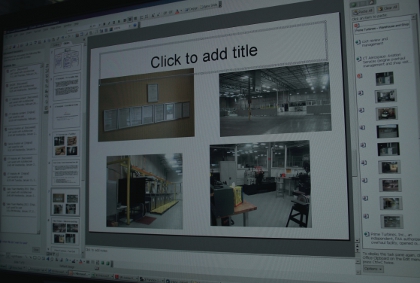
10:30 am: Continue work on a PowerPoint Presentation for the Sales Team.

Creating the sales presentation in PowerPoint

11:00 am: Realize I don’t have all the pictures that I need for the sales presentation, so I head out for a mini photo-shoot! (Logos have been intentionally blurred)

Company logo for sales team presentation

12:00 pm: Finished the photo shoot and picked up a super healthy and nutritious lunch from Taco Cabana, minus the healthy and nutritious part! Checked to see if my grades were posted yet while enjoying my enchiladas… STILL no grades posted.

Delicious enchiladas from Taco Cabana!

1:00 pm: Our tabletop booth was delivered, so I can check the new graphics we just received! This booth will be sent to a tradeshow in about one month, so I’m hoping the graphics are perfect (just as they were in the proof I verified a month ago).

Tabletop Booth

1:45 pm: Graphics are hung, and they look great! One of the magnets on the booth hardware isn’t sticking very well, so I’ve got to ask the manufacturer about replacing it. (Logos have been intentionally blurred)

Booth graphics!

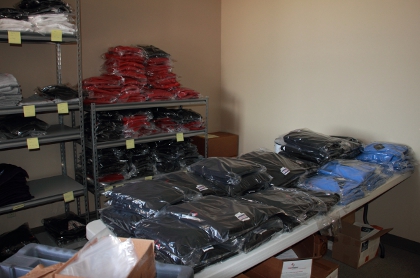
2:00 pm: Unpacking a few shipments of company promotional items. I’m in charge of the promotional room, so it’s like Christmas every few weeks in my office!

Organizing the promotional room

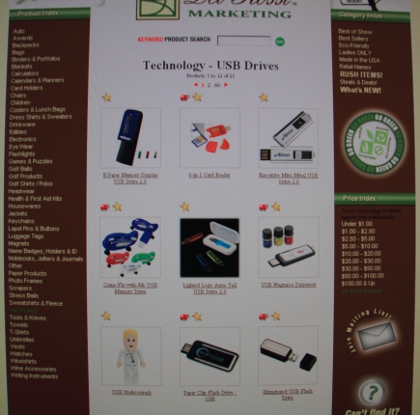
3:00 pm: Pulling pricing for more promotional items, it’s an on-going process!

Checking quotes for promotional pricing

3:30 pm – 5:00 pm: Edit the pictures from the mini photo-shoot, answer more e-mail, accept more packages, then head home!

My schedule is never the same from day to day, and it’s always a balancing act! It’s also pretty cyclical, this week was verifying and unpacking all the orders, which means that a few weeks prior it was designing and proofing everything. The most challenging aspects of my job are keeping the priorities straight, and managing the relationships with our vendors and suppliers. I enjoy the fast pace and variety of projects in my position as a Marketing Coordinator.

Happy Friday!

This week has been a mix of fast-and-furious and slow waiting. I had a mid-term exam in my Buyer Behavior class, started round 2 of Accounting, and received a number of promo packages and proofs at work. This weekend is birthday celebrations with two family members, and some singing! Whew… what a week! On another note, if you find the time, I highly recommend a browse through the following links:

For my fellow marketing nerds, via Forbes: BRILLIANT Multi-brand partnership

For my fellow students, via ERE blog: Thoughts on Education

For those who were unsatisfied with the “Oscar All Access” offering from ABC, via Mashable: Get A Refund

For the blogosphere, via Employed Panache: Photo Job Shadow (I’ll have my contribution on the blog next week!)

For all those who buy from Amazon, via WSJ: The latest on out-of-state taxes for online retailers

Like the links? Follow me on Twitter @ashleyfaus for links, updates, and blog posts!